11/08/2023

Visit to Cornell University

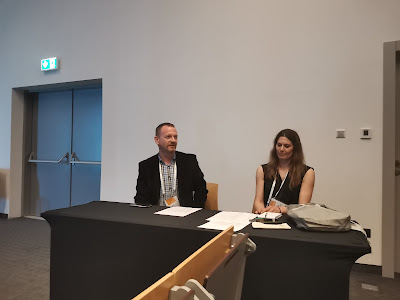
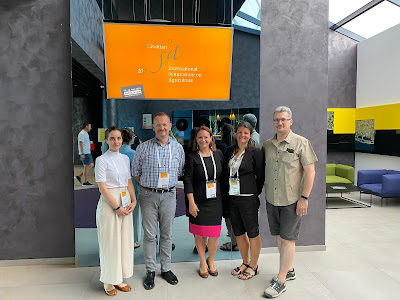
 On October 16-22, Ákos had the opportunity to visit Cornell University in Ithaca, New York, USA. The visit was part of and exchange program between the Cornell College of Agriculture and Life Sciences (CALS) and MATE. During the last 5 years, we had the pleasure of hosting undergraduate students from CALS on a summer internship and now it was our turn to see and experience the atmosphere of Cornell. Ákos was accompanied by two colleagues from the Department of Zoology and Ecology of MATE, Professor Péter István Nagy and senior lecturer Gergely Boros as well as by Erasmus+ International Credit Mobility Coordinator Zsuzsanna Heltai. We were hosted primarily by Dr. Márk Sárváry, alumnus of MATE who works as a Director of Investigative Biology Teaching Laboratories at CALS and whose help was simply invaluable in our daily life at Cornell. We had the pleasure of meeting the students that we hosted during last summer when they presented the experiences of their stay in Hungary. We also had the privilege of meeting distinguished scientists of research fields related to ours and discuss the possibilities of collaboration. Last but not least, Ákos was super-excited to meet Jelena Lujić, alumna of the Fish Reproduction Group at MATE, our former post doc who now works in the prestigious Cohen Lab of the College of Veterinary Medicine at Cornell.


Participation in the organization of Aquaculture Europe 2023

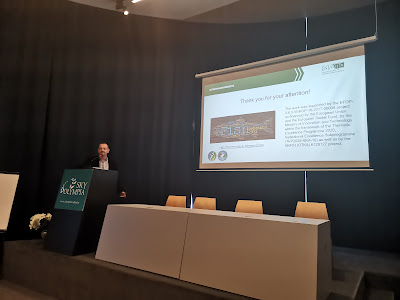
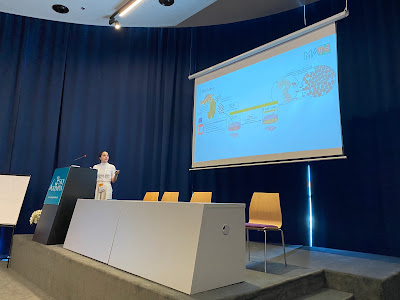
It was a great privilege to take part in the organization of Aquaculture Europe 2023 held in beautiful Vienna, Austria on September 18-21. The team of MATE had a visible presence at the meeting by providing the program co-chair (Professor Béla Urbányi) and several members of the local organizing committee, chairing and co-chairing several sessions and involving students in the daily organizational work. It was an incredible experience working alongside committed professionals and meeting friends. Looking forward to Aquaculture Europe 2024 in Copenhagen next year!


10/11/2022

Participation at the Aquaculture Europe 2022 meeting in Rimini

Between September 27-30th, Ákos with several other colleagues of the Institute of Aquaculture and Environmental Safety of MATE has participated at the Aquaculture Europe 2022 meeting organized by the European Aquaculture Society. Aquaculture Europe is the largest annual gathering of scientists and professionals working in the field of fisheries and aquaculture in Europe. This year's meeting was organized in the beautiful city of Rimini, a popular resort on the Adriatic coast of Italy. For our team its special significance is that in 2023 we will take activ
e part in the organization of this meeting in Vienna, Austria and this year's conference gave us a better insight into the operational aspects of hosting an event of this size.

Ákos had the privilege of co-chairing the section "Broodstock and Hatchery Management" with Nicolas Mace. He also gave a presentation entitled "Cryopreservation and transplantation of germline stem cells in salmonids: What have we learned?"

9/26/2022

New paper published in Aquaculture

 Thanks to the efforts of our colleague Dr. Uroš Ljubobratović, a new publication came out in Aquaculture with Nevena, Zoran and Ákos as co-authors. This was a collaborative effort between our group and that of Uroš, both belonging to the Institute of Aquaculture and Environmental Safety as well as Dr. Sylvain Milla of the University of Lorraine in France. Enjoy!

Uroš Ljubobratović, Nevena Kitanović, Sylvain Milla, Zoran Marinović, Georgina Fazekas, Jelena Stanivuk, Zoltán Nagy, Ákos Horváth. 2022. Predicting population's oocyte maturation competence and evaluating individual's latency time using in vitro oocyte maturation in pikeperch (Sander lucioperca). Aquaculture, Volume 562, 15 January 2023, 738851. https://doi.org/10.1016/j.aquaculture.2022.738851

Abstract

Artificial reproduction of pikeperch (Sander lucioperca) is characterized by the unpredictability of latency time (LT) as well as the variability of egg quality depending on the time of hormonal stimulation. To predict latency time and thus enhance fertilization outcomes, the present study evaluated whether in vitro maturation techniques could be utilized to assess the status of oocyte maturation competence (OMC). Oocyte samples from nine pond-reared females originating from the Czech Republic (CZECH) and 12 intensively cultured females originating from river Körös (HAKI) were catheterized at the time of hormonal stimulation and cultured in L15 medium supplied with 100 ng/mL of DHP. The stage of final oocyte maturation (FOM) was monitored both in vivo and in vitro and egg quality features were evaluated. HAKI group was characterized by larger oocytes at the time of stimulation (934.4 ± 32.9 μm vs. 860.0 ± 22.7 μm), as well as higher embryo survival (77.7 ± 10.4% vs 53.5 ± 28.8%), suggesting that artificial reproduction was performed prematurely for CZECH group. Oocytes from HAKI fish displayed a higher share of maturing oocytes (41.4 ± 9.1% vs. 13.8 ± 17.6%) and in all samples germinal vesicle breakdown was noticed, while in the CZECH group it was so only in oocytes of one fish. With respect that all fish ovulated after the gonadoliberin stimulation, gonadotropin-regulated OMC is assumed. A correlation was found between the in vivo and in vitro LTs in the HAKI group only (r = 0.791, P = 0.002), indicating a certain autonomy of ovarian follicle of other parts of the physiological axis after completed OMC. The in vitro techniques show great promise for practical application in hatcheries to evaluate the aptness for hormonal stimulation on both individual and population levels.

9/25/2022

Participation at the Gametes Worskhop in Gdańsk

 Nevena and Ákos along with Gergely Bernáth, Borbála Nagy, Tamás Szabó and Uroš Ljubobratović (colleagues from the Institute of Aquaculture and Environmental Safety at MATE) participated at the 8th International Workshop on the Biology of Fish Gametes organized on September 20-23 in Gdańsk, Poland by our friends from the Institute of Animal Reproduction and Food Science of the Polish Academy of Science in Olsztyn. We had a wonderful time discussing science and progress in fish gamete research and of course this was also a good opportunity to see old friends and make new ones. Nevena and Ákos both gave oral presentations and Nevena presented two posters. The venue of the next workshop was al
so decided, thus, everybody is welcome to León, Spain in 2022

Congratulations and Thanks to Andrzej Ciereszko, Daniel Żarski, Sylwia Judycka, Joanna Nynca, Mariola Dietrich and everybody at the host institute for the professional organization and memorable time together.

We are also super-proud of Nevena who won the prize for the best poster presented at the meeting. Congratulations, Nevena!


9/14/2022

Zoran's project funded

We have received wonderful news today. Zoran's proposal entitled "Surrogate production of genome edited fish" submitted this February to the Young Researcher Excellence Program of the OTKA projects by the National Research, Technology and Innovation Agency of Hungary has been funded (you can access the announcement in Hungarian here: https://nkfih.gov.hu/.../nkfi-alap/tamogatott-projektek-fk22). We are looking forward to a continued successful research work. Congratulations, Zoran!

6/24/2022

Conference in Croatia

 On June 19-24th, Nevena, Betti and Ákos participated at the 57th Croatian and 17th International Symposium of Agriculture in Vodice, Croatia. We were accompanied by our colleagues Dr. Balázs Kovács of the Department of Molecular Ecology, Jelena Stanivuk, PhD student under the joint supervision of Ákos and Dr. Uroš Ljubobratović working at the Research Center of Fisheries and Aquaculture (HAKI), Dr. Mária Kovács-Weber of the Institute of Animal Husbandry Sciences and Dr. István Lehoczky of the National Biodiversity and Gene Conservation Center. A
s usual, the conference had a session on Fiheries, Game Management and  Beekeeping with Ákos co-chairing a part of the morning session on Fisheries together with Dr. Zvjezdana Popović Perković of the University of Split. The conference was an excellent opportunity to strengthen our collaboration with Croatian colleagues and to become acquainted with each other’s work.

The works presented by the members of our team:

Ákos Horváth, Bernadett Pataki, Zoran Marinović, Béla Urbányi: Inherited cryoresistance of fish sperm: is it real? 

Nevena Kitanović, Zoran Marinović, Bernadett Pataki, Balázs Csorbai, Gergely Mészáros, Ákos Horváth: Optimization of Leibovitz L-15 media for in vitro maturation of common carp ovarian follicles 

Bernadett Pataki, Ádám Staszny, Gergely Mészáros, Nevena Kitanović, András Ács, Árpád Hegyi, József Molnár, Balázs Csorbai, Béla Urbányi, Ákos Horváth: Morphological changes in common carp (Cyprinus carpio) progeny induced by the use of cryopreserved sperm 

Jelena Stanivuk , Zoran Marinović, Uroš Ljubobratović, Ákos Horváth: Fixation of histological specimens of juvenile testicular tissue of pikeperch (Sander lucioperca) and Eurasian perch (Perca fluviatilis


Ákos giving his presentation

Nevena giving her presentation

Betti presenting her results

Ákos co-chairing the session with Dr. Zvjezdana Popović Perković 

The team after the session (photo by O. Barić)


5/17/2022

Another paper published in Aquacultrue Reports

 A new paper has been published in the journal Aquaculture Reports in collaboration with our colleagues from the Department of Animal Science, Biotechnical Faculty, University of Ljubljana and the Lillafüred Trout Farm in Hungary. Enjoy!

Marinović, Z., Lujić, J., Sušnik Bajec, S., Djurdjevič, I., Snoj, A., Hoitsy, G., Urbányi, B., Horváth, Á., 2022. Evaluation of triploid rainbow trout Oncorhynchus mykiss as a surrogate parent for brown trout Salmo trutta m. fario and grayling Thymallus thymallus. Aquac. Reports 24, 101163. https://doi.org/10.1016/j.aqrep.2022.101163

Abstract:

Surrogate production through germline stem cell (GSC) transplantation is becoming a very promising technology in species management and ex situ species conservation. In the present study, we have evaluated if the triploid rainbow trout is a suitable surrogate parent for the production of other salmonid gametes. In three independent trials conducted in two countries, we have transplanted brown trout and grayling GSCs into triploid rainbow trout larvae as recipients. Two months after transplantation, dissection of recipients displayed that both spermatogonial (SSCs) and oogonial (OSCs) stem cells of both species were able to colonize recipient gonads. After three years of rearing, neither male nor female recipients displayed signs of gametogenesis progression. Species-specific (for both donor and recipient species) amplification of mtDNA control region on the other hand displayed a presence of donor-derived germ cells within recipient gonads. This indicated that even though donor cells were able to colonize recipient gonads, they remained in a dormant or quasi-dormant state, and did not progress with gametogenesis. This study displays that the rainbow trout is not a suitable recipient for all salmonid species, and that careful selection of recipients is a crucial step in developing the surrogate production technology.

Work in Croatia

Within the frames of the Hungarian-Croatian bilateral project, between May 9-13th we have enjoyed the hospitality of Ana Gavrilović, her team from the University of Zagreb as well as the staff of the Aquarium Pula in Pula, Croatia. The goal of the project is to develop cryopreservation methods for the gametes and larvae of various bivalvian species found in the Adriatic sea including the European flat oyster (Ostrea edulis), the mediterranean scallop (Pecten jacobaeus) and possibly for the critically endangered noble pen shell (Pinna nobilis) whose populations have been severely affected by the pathogen Haplosporidium pinnae. Ákos and Zoran were accompanied by Dr. Balázs Kovács and Réka Balogh of the Department of Molecular Ecology of our institute who plan to carry out molecular studies on the species. We wish to thank all our Croatian friends and colleagues for their hospitality and help! Within the frames of the Hungarian-Croatian bilateral project, between May 9-13th we have enjoyed the hospitality of Ana Gavrilović, her team from the University of Zagreb as well as the staff of the Aquarium Pula in Pula, Croatia. The goal of the project is to develop cryopreservation methods for the gametes and larvae of various bivalvian species found in the Adriatic sea including the European flat oyster (Ostrea edulis), the mediterranean scallop (Pecten jacobaeus) and possibly for the critically endangered noble pen shell (Pinna nobilis) whose populations have been severely affected by the pathogen Haplosporidium pinnae. Ákos and Zoran were accompanied by Dr. Balázs Kovács and Réka Balogh of the Department of Molecular Ecology of our institute who plan to carry out molecular studies on the species. We wish to thank all our Croatian friends and colleagues for their hospitality and help!


Zoran and Ákos demostrating the two-pipette dilution technique

Réka and Balázs taking samples from oyster for molecular analysis


Balázs and Zoran analyzing the survival of cryopreserved oyster larvae

The team in front of the famous Arch of Sergii in Pula


5/11/2022

Preparing for Aquaculture Europe 2023

 Last week, Ákos and Professor Béla Urbányi, director of the Institute of Aquaculture and Environmental Safety has attended the meeting hosted by the European Aquaculture Society (EAS) to initiate preparation for the most important annual EAS event, the Aquaculture Europe conference in 2023. The meeting will be held in Vienna, Austria and is scheduled for September, 2023. The main theme of the meeting will be balanced diversity in aquaculture development.

As Vienna lies in the heart of Central Europe, the preparatory activities also involved the participation of several parties, including colleagues from Austria, Hungary, Czech Republic and Germany. Participants discussed various issues related to the organization, including the venue, program, conference sessions, student involvement and distribution of tasks to various committees. Béla has assumed the role of program co-chair of the meeting while Ákos is a member of the Local Organizing Committee charged with publicizing the event on various platforms. 

We would like to thank Alistair Lane, Mario Stael and John Cooksey for the organization and we are looking forward to our continued collaboration.


4/20/2022

Return to Slovenia

After a 5-year hiatus, we finally were able to return to beautiful Slovenia! Thanks to the invitation by our colleague, Dr. Simona Sušnik Bajec of the Department of Animal Science, Biotechnical Faculty, University of Ljubljana we were able to collaborate with her and her PhD student Tjaša Kodela on the reproduction of the grayling (Thymallus thymallus). Betti and Ákos spent 3 days working at the hatchery of the Fisheries Research Institute of Slovenia in Kobarid, stripping sperm and eggs and checking sperm quality using CASA. Grayling spawning has drastically reduced during the last decade in the Soča river and the Institute puts a considerable effort into the culture and repopulation of this fish species. Hopefully, we will be able to assist Tjaša in her scientific studies.


Grayling males waiting to be stripped

Ákos and Betti in the hatchery

Ákos and Tjaša at work

4/01/2022

New paper published in Aquaculture Reports

A new paper with Betti's first authorship has been published in Aquaculture Reports. Enjoy: 

Bernadett Pataki, Ákos Horváth, Gergely Mészáros, Nevena Kitanović, András Ács, Árpád Hegyi, József Molnár, Balázs Csorbai, Béla Urbányi. 2022. Adjustment of common carp sperm concentration prior to cryopreservation: Does it matter? Aquaculture Reports Volume 24, June 2022, 101109 https://doi.org/10.1016/j.aqrep.2022.101109 

Abstract 

Absorbance and computer-assisted sperm analysis (CASA) was used to assess the sperm concentration of common carp (Cyprinus carpio) as an alternative to hemocytometer counting. Also the effect of different sperm concentrations on post-thaw sperm parameters and fertilizing capacity were tested. The main goal of the research was to find out whether the tested methods are suitable for fast measurement of sperm concentration and if the pre-setting of sperm concentration before cryopreservation offers any advantages over dilution of sperm to a given ratio. A linear relationship of sperm concentration measured with CASA (N = 12) as well as sperm absorbance assessed with a microplate reader with spectrophotometry module (N = 18) with sperm concentration counted in a Bürker-Türk type hemocytometer was established. For cryopreservation, 4 sperm concentrations were used (0.5; 1; 2; 4 × 10⁹ spermatozoa per ml) and compared to dilution to a ratio of 1:9. A significant positive relationship was found between the absorbance and sperm concentration (p < 0.0001, r2 = 0.8289) as well as between immotile cell concentration measured with CASA and that counted in a hemocytometer (p < 0.0001, r2 = 0.8559). No significant main effect of sperm concentration was found on any post-thaw motility parameters measured by CASA with the exception of linearity (p = 0.0056). Sperm concentration had a significant main effect (p = 0.0156) on the fertilizing capacity of sperm samples diluted to various concentrations prior to cryopreservation. Only the highest concentration of 4 × 10⁹ spermatozoa per ml (66 ± 6% fertilization) showed a significant difference (p = 0.0121) in comparison to the pre-set dilution ratio (49 ± 5% fertilization). The results show that both spectrophotometry and CASA are suitable for the assessment of common carp sperm concentration and that maximizing sperm concentration prior to cryopreservation results in higher fertilization.

11/28/2021

Training of Marta Blanes and Leonor Ferrão

 Between October 24th and November 26th, this year we had the pleasure of hosting Marta Blanes and Leonor Ferrão of the Group of Aquaculture and Biodiversity under the leadership of Prof. Juan F. Asturiano at the Polytechnical University of Valencia in Spain. Marta and Leonor were trained by Zoran in various techniques including isolation of germline stem cells (GSCs), treatment of embryos with  morpholinos to induce sterility as well as transplantation of GSCs into suitable recipents. Their work was part of the EELGONIA project funded by the Spanish Ministry of Science and Innovation. During their stay, Marta and Leonor have isolated GSCs from cryopreserved gonads of the European eel and transplanted them under Zoran's supervision into sterilized zebrafish and common carp larvae. The recipient larvae are currently grown in our facilities and we cannot wait to see what will happen to the transplanted cells.

Marta and Leonor with members of our team in front of our building

11/20/2021

Aquaculture Europe 2021

 Zoran and Ákos attended the Aquaculture Europe 2021 meeting that was held on October 4-7 in Funchal, the capital city of the beautiful island of Madeira in Portugal. The meeting was organized by the European Aquaculture Society and attended by more than 1400 participants. The conference was of special interest for us because of the opportunity to meet our friends Juan F. Asturian of the Polytechnical University of Valencia (Spain) and Elsa Cabrita from CCMAR and University of Algarve (Portugal) who was also co-chairing the session on Reproduction. The conference was very well-organized with high-quality sessions and a large trade show. Regarding the cons, the e-poster session was virtually invisible and completely insignificant. A classical poster session with poster boards would have been much nicer. Nevertheless, we had a good time and will definitely come to EAS next year.

The posters presented were:

Á. Horváth, B. Pataki, G. Mészáros, Z. Marinović, N. Kitanović, B. Urbányi: Does sperm concentration matter in carp sperm cryopreservation?

Z. Marinović, J. Lujić, S. Sušnik Bajec, I. Djurdjevič, A. Snoj, B. Urbányi and Á. Horváth: Triploid rainbow trout Oncorhynchus mykiss as a recipient of brown trout germline stem cells.

Bernadett Pataki, Béla Urbányi, Tímea Kollár, Ákos Horváth: Inheritance of sperm cryoresistance in common carp (Cyprinus carpio)

Ákos with Elsa Cabrita (CCMAR, Faro, Portugal) and Juan F. Asturiano (Universitat Politècnica de València, Spain)


9/13/2021

Conference in Croatia

Ákos and Betti along with our colleagues Dr. Balázs Kovács and Réka Balogh from the Department of Molecular Ecology have participated at the 56th Croatian and 16th International Symposium of Agriculture which was held between September 5-10th in Vodice, Croatia. Both Betti and Ákos presented the results of the group in several talks during the session on Fisheries, Game Management and Beekeeping. 

Prior to the meeting we also had the pleasure to visit the hatchery of the largest Croatian marine aquaculture company, Cromaris which is situated in the little coastal town of Nin. We had a guided tour of the hatchery by chief technologist Adelko Mihovilović and had the fortune of seeing a large-scale marine fish hatchery for the first time.

Visit to the hatchery of the marine aquaculture company Cromaris in Nin. Left to right: Ákos, Betti, chief technologist Adelko Mihovilović, Réka Balogh and Dr. Balázs Kovács

Betti giving her presentation

Ákos giving his presentation


7/11/2021

Zoran's defense

 The long anticipated day has finally come: one of the core members of our team, Zoran Marinović has defended his PhD title. His dissertation was entitled: "Intra- and inter-specific transplantation of spermatogonial stem cells in freshwater fish". The defense was held online on 5th July, 2021 and it was a special pleasure to host Dr. Elsa Cabrita of CCMAR/University of Algarve from Faro, Portugal in Gödöllő as one of Zoran's reviewers. This was the first time in the history of the PhD school of Animal Biotechnology and Animal Sciences that a foreign reviewer has taken part in the work of the defense committee. The committee has evaluated Zoran's presentation, dissertation and debate to a score of 100%. We congatulate Zoran to his success and wish him all the best. 

Well done, Dr. Marinović!

The committee during Zoran's online defense


After a job well done a dinner in Budapest on the banks of the Danube


Ági's defense

 The alumna of our group, Ágnes Ősz has successfully defended her PhD thesis on 28th May, 2021. Her dissertation was entitled "Genetic analysis of Hungarian brown trout populations and development of a marker-assisted breeding system". Ági gave an impressive performance and the committee evaluated her presentation and discussion to a score of 97%. We wish Ági all the best and congratulate her to her new title.

Good job, Dr. Ősz!

6/23/2021

New paper published in Aquaculture

 A new paper describing the genetic diversity of brown trout broodstocks throughout Europe was published with Ákos as a coauthor. The main conclusion of the paper is that there exists an international strain of Atlantic lineage of the species that is distributed throughout the continent that could potentially contribute to the reduction of the genetic diversity in brown trout. Enjoy!

Patrick Berrebi, Ákos Horváth, Andrea Splendiani, Stefan Palm, Rafał Bernaś (2021) Genetic diversity of domestic brown trout stocks in Europe. Aquaculture, Volume 544, 15 November 2021, 737043

Abstract

Brown trout (Salmo trutta) is composed of numerous geographical forms in the wild and a multitude of stocks reared in hatcheries. Practices impacting this species are domestication and fish farming. Thousands of hatcheries are producing domestic trout which are frequently released in the wild without real knowledge of the origin and genetic composition of the strains and of the receiving populations. The present study contains an analysis of the genetic structure (using twelve microsatellites) of 26 hatchery strains from Europe (Sweden, Poland, Czech Republic, Slovakia, Hungary, France, Italy and Spain) and one from North America (Minnesota). Several new observations improved our knowledge on this domestic part of S. trutta. First, a cross-border commercial strain of the North Atlantic lineage occupies most of European hatcheries and the American one, as a probable consequence of intensive exchanges of broodstock materials over time. In addition to the common Europe-wide commercial Atlantic strain, local strains stemming from domesticated regional wild fish also occur. Second, the level of genetic polymorphism of most hatchery strains is high to very high, likely reflecting genetic admixture counteracting expected losses of diversity through random genetic drift and domestication. This study emphasizes the value of identifying the genetic composition of hatchery stocks used for releases. It further stresses the need for caution when stocking a common stock across the whole geographical range of a species, with risks for reducing the intraspecific genetic diversity and local adaptation.

3/26/2021

Participation in an online workshop

Members of our team (Ákos, Nevena and Zoran) are participating in the 4th edition of the Workshop on Reproductive Biotechnology and Cryobanking in Aquatic Species organized by our colleagues from the Center of Marine Sciences (CCMAR) of the University of Algarve in Faro, Portugal. Ákos will give a talk on the principles of cryopreservation, and he will be joined by Nevena and Zoran in a video presentation of zebrafish gonad vitrification as well as transplantation of cells into suitable recipients. Registration is free and open until April 2nd


2/06/2021

Institutional changes


As of February 1st, 2021 Szent István University no longer exists. Following a merger of SZIU with the University of Kaposvár, the Georgikon Faculty of Agriculture of the University of Pannonia and the Károly Róbert Campus of Eszterházy University on August 1st, 2020, a new merger took place last Monday when the National Agricultural Research and Innovation Centre (NAIK) was integrated into the university structure. 

The new university is called Hungarian University of Agriculture and Life Sciences (Magyar Agrár- és Élettudományi Egyetem – MATE). The university has five campuses: Buda (Budapest), Szent István (Gödöllő), Georgikon (Keszthely), Kaposvár (Kaposvár) and Károly Róbert (Gyöngyös) and instead of faculties, it is divided into 21 institutes. 

Our team belongs to the Institute of Aquaculture and Environmental Safety, one of the largest institutes of the new university with approximately 150 employees and PhD students at 3 campuses. One of the constituent institutes of the former NAIK, the Research Institute for Fisheries and Aquaculture (HAKI) also belongs to our Institute now (renamed as a research center). The new Institute consists of 6 departments and one research center. Our team belongs to the Department of Aquaculture of which Ákos is the designated chair.

To know more about the new university, please visit this site: https://uni-mate.hu/hu